Doris Mangiaracina Benbrook, PhD, Professor and Director of Research
Section of Gynecologic Oncology, Department of Obstetrics and Gynecology
University of Oklahoma HSC, 975 NE 10th Street, Room 1374, Oklahoma City, OK 73104
Phone: (405) 271-8707, FAX: (405) 271-3874, Email:
Doris-Benbrook@ouhsc.edu


Picture 002


http://www.ouhsc.edu/benbrooklab/Dr_Doris%20Benbrook's%20Webpage_files/dna.gif

Dr. Benbrook’s Lab Website


Dr. Benbrook’s Curriculum Vita

Recent Commercial 0509

Marathon Article 2010

International Innovation Report 2011


Dr. Benbrook’s research spans from basic science through translational and clinical studies.  Her major goal is to prevent cancer before it develops by developing diagnostic tests for early stage cancer and drugs to prevent cancer.  She developed a 3-D organotypic model of endometrial carcinogenesis and chemoprevention that provides the opportunity to study stem cells and the systems of molecular events that drive these dynamic processes.   Dave Alberts, MD and Peter Bartels, PhD are performing karyometric analysis of the nuclear changes that occur during carcinogenesis of this model to provide quantifiable endpoints that can be compared with systems of gene expression changes.  Igor Dozmorov, PhD, is conducting the systems biology analysis.  Key molecules controlling these systems, and that can be detected in blood, are being studied in clinical specimens for detection of early stage endometrial cancer.  These specimens are being collected in a nation-wide protocol conducted by the Gynecologic Oncology Group (GOG) protocol 224 evaluating prevention and diagnostic methods in women with endometrial hyperplasia that have a 40% incidence of endometrial cancer.


The chemoprevention aspect of this process consists of a family of drugs developed by a long-term collaboratiion with K. Darrell Berlin, PhD.  Together, Dr’s Benbrook and Berlin developed a promising class of anti-cancer compounds called Flexible Heteroarotinoids (Flex-Hets).  The lead Flex-Het, called SHetA2 is currently in preclinical testing in the National Cancer Institute’s (NCI’s) Rapid Access to Prevention Interventive Development (RAPID) program.  It is anticipated that the preclinical testing needed for submission of an Investigative New Drug (IND) application to the US Food and Drug Administration (FDA) will be completed by the Spring of 2010.  SHetA2 has also demonstrated promising activity in sensitizing cancer cells to death receptor ligands, TNFa and TRAIL, and therefore could be used to enhance the efficacy in clinical trials evaluating  tumor-selective delivery of TNFa, and humanized monoclonal antibodies to the TRAIL receptors (mapatumumab, HGS-ERT1 developed by Human Genome Sciences; lexatumumab, developed by Human Genome Sciences; AMG655, developed by Amgen; and apomab, developed by Genentech.  In addition, SHetA2 is being developed for treatment of Polycystic Kidney Disease (PKD).  The lack of toxicity or teratogenicity of SHetA2 in vivo suggests that this drug will be non-toxic in clinical trials.


Dr. Benbrook’s research group demonstrated that SHetA2 exerts it’s anticancer effect by inducing intrinsic apoptosis in cancer cells without harming normal cells through differential effects on mitochondria and the Bcl2 family of proteins; by inducing G1 cell cycle arrest in both cancer and normal cells through degradation of Cyclin D1; by inducing differentiation through up-regulation of E-Cadherin; and by iinhibiting angiogenesis through inhibition of angiogenic cytokine secretion by cancer cells and direct effects on endothelial cells.


For Students and Postdoc’s:


The philosophy our research team can be summarized in a quote by William Henry Welch, which describes “translational research” about a century before the term was coined:


“The discovery of the healing serum is entirely the result of laboratory work.  In no sense was the discovery an accidental one.  Every step leading to it can be traced, and every step was taken with a definite purpose and to solve a definite problem.  These studies and resulting discoveries mark an epoch in the history of medicine.”


Our approach is to first define the important clinical questions. Next, we generate hypotheses that address the questions and design a series of experiments that will support or refute the hypotheses. 


Currently, we are trying to address the clinical questions of how to prevent and treat cancer, polycystic kidney disease (PKD) and polycystic ovarian syndrome (PCO).  Click here to view a simplified version of our plan to develop a cancer prevention pill.


In order to cure cancer, we must first understand how it develops.  It is well established that DNA mutations in critical oncogenes and tumor suppressor genes result in loss of critical controls over cell behavior that contribute the initiation and development of cancer.  The evolution of a single cell into a growing metastatic population of heterogeneous cancer involves additional epigenetic and non-genetic molecular, cellular and tissue-level events. 


Cancer Hypotheses: Certain patterns of molecular alterations can transform normal cells into cancer cells.  Interfering with a subset of these alterations can prevent cancer or induce a natural form of cell death called apoptosis.  Also, interfering with the development of blood vessels within tumors (angiogenesis) can prevent and treat cancer.


Click on the links below for details on Cancer Experimental Approaches:

·         Develop and validate a 3-D organotypic model of carcinogenesis and chemoprevention

1.   Identify the molecular alterations that occur during these dynamic processes.

2.   Determine if preventing these molecular alterations also prevent these processes.

3.   Evaluate clinical specimens for target molecules involved in these processes.

·         Develop drugs that interfere with or “target” the validated molecular alterations

·         Develop clinical tests based on the validated molecules to detect cancer before it causes harm


This work has been forged through multiple collaborations.


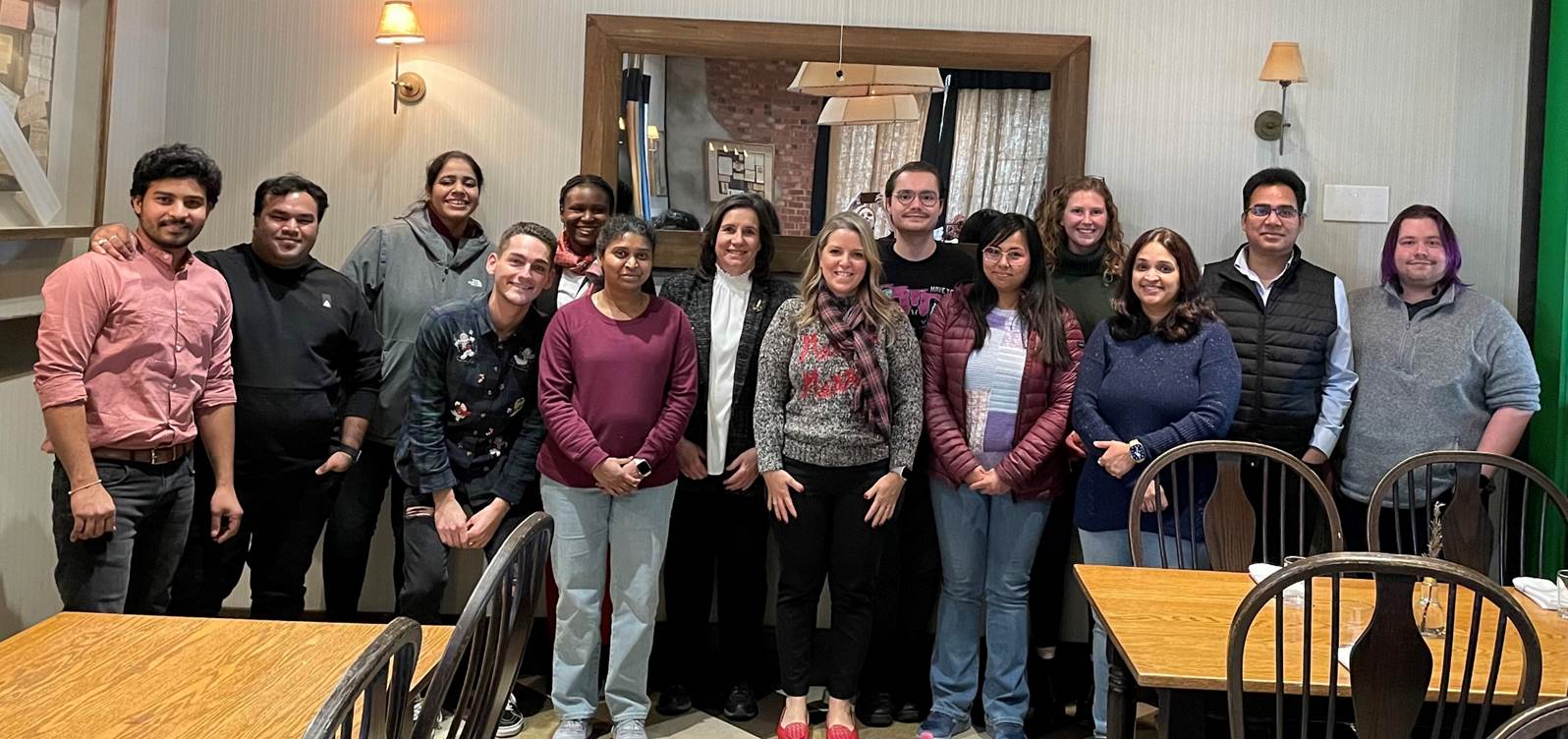
Current and Past Lab Group Photos:

2000, 2004, 2006, 2007


Selected Publications

Feedback

Full Newsletter

Just article